

Collagen has become one of the most popular supplements in the wellness world.
You’ll find it in powders, capsules, protein blends, coffee creamers, gummies, beauty formulas, and ready-to-drink products. It is often marketed for skin hydration, hair and nail support, joint comfort, mobility, and healthy aging.
At first, collagen seems simple. Add a scoop to your coffee or smoothie and make it part of your routine.
Then you start comparing labels.
Some products say collagen peptides. Others say hydrolyzed collagen, Type I and III collagen, marine collagen, bovine collagen, chicken collagen, Type II collagen, UC-II, multi-collagen, or eggshell membrane.
Once you understand a few key terms, choosing a collagen supplement becomes much easier.
This guide explains what collagen does in the body, the different types of collagen found in supplements, the benefits collagen is most often used for, and how to choose a product that fits your goals.
What Is Collagen?
Collagen is the most abundant protein in the body. It helps form the structure of your skin, bones, tendons, ligaments, cartilage, blood vessels, and connective tissue.
A simple way to think about collagen is as part of the body’s natural framework. It helps tissues stay strong, flexible, and resilient.
Collagen supplements provide collagen-derived amino acids and peptides. Amino acids are the building blocks of protein. Peptides are short chains of amino acids. In hydrolyzed collagen, the larger collagen protein has been broken down into smaller peptides, which makes it easier to mix into drinks and use in powders.
Collagen is especially known for amino acids such as glycine, proline, and hydroxyproline. These amino acids help give collagen its unique structure and are one reason collagen supplements are often used in routines focused on skin, connective tissue, and joint support.
Your body naturally makes collagen, but collagen production and collagen quality can shift with age. Lifestyle also plays a role. Protein intake, vitamin C, sleep, movement, hydration, smoking, sun exposure, and overall nutrition can all influence how well the body maintains collagen-rich tissue.
Vitamin C deserves special mention because the body needs it for collagen biosynthesis. It also supports connective tissue and plays a role in wound healing.
Collagen Types vs. Collagen Sources
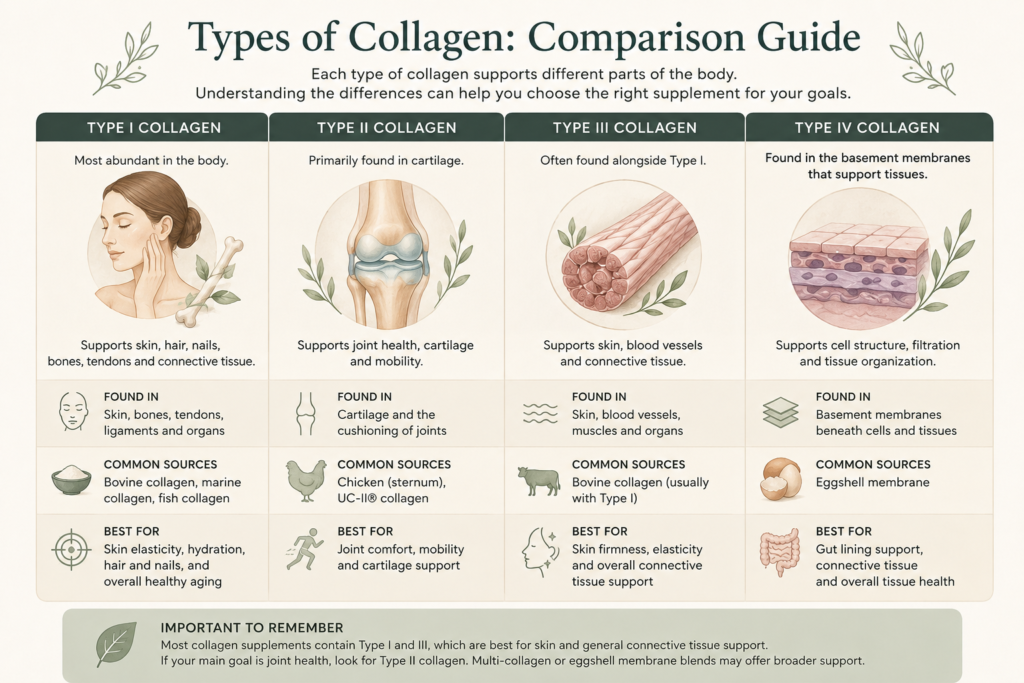
There are many types of collagen in the body. The collagen family includes 28 known members, although only a few are commonly discussed in supplements.
For supplements, the most relevant types are usually:
- Type I collagen
- Type II collagen
- Type III collagen
- Type IV collagen
It also helps to separate collagen types from collagen sources.
A collagen type describes where that collagen tends to function in the body. A collagen source describes where the supplement ingredient comes from, such as bovine hide, fish skin, chicken cartilage, or eggshell membrane.
For example, a product may be marine-sourced and mostly Type I collagen. Another may be chicken-sourced and focused on Type II collagen. Both are collagen supplements, but they are often chosen for different reasons.
Type I Collagen: Skin, Hair, Nails, Bones, and Tendons
Type I collagen is the most abundant collagen type in the body. It is found in skin, bones, tendons, ligaments, and other connective tissues.
This is the type most often associated with skin elasticity, nail strength, hair support, bones, tendons, and general connective tissue health. Many collagen peptide powders marketed for beauty or healthy aging are rich in Type I collagen.
Common supplement sources include bovine collagen and marine collagen.
Type II Collagen: Joints and Cartilage
Type II collagen is closely connected with cartilage, the firm tissue that helps cushion joints.
This makes Type II collagen especially relevant for people interested in joint comfort, mobility, and staying active. If your main goal is cartilage support, the label is worth reading closely because many standard collagen powders focus more on Type I and Type III collagen.
A joint-focused formula may highlight Type II collagen, chicken collagen, undenatured Type II collagen, or UC-II.
What Is UC-II Collagen?
UC-II is a patented form of undenatured Type II collagen derived from chicken sternum cartilage. “Undenatured” means the collagen has been processed in a way that helps preserve more of its original structure. This makes UC-II different from standard hydrolyzed collagen peptide powders, which are broken down into smaller peptides.
The practical takeaway is simple: for skin, hair, nails, and general healthy aging, Type I and III collagen peptides are common choices. For cartilage and joint comfort, Type II collagen or undenatured Type II collagen may be more relevant.
Type III Collagen: Skin and Connective Tissue Support
Type III collagen is often found alongside Type I collagen. It helps support skin, blood vessels, organs, and connective tissue.
This is why many bovine collagen supplements advertise Types I and III together. For skin, tissue, and general healthy aging support, a Type I and III collagen peptide supplement is a common option.
Type III collagen usually appears as part of a broader collagen formula rather than as a standalone supplement.
Type IV Collagen: Basement Membrane Support
Type IV collagen has a different role from Types I, II, and III.
While Types I, II, and III help support fiber-like structures in tissues such as skin, tendons, bones, and cartilage, Type IV collagen helps form basement membranes. These are thin tissue-supporting layers that sit beneath or around many cell and tissue structures. Collagen IV is considered a core component of basement membranes, helping provide structure and support.
Type IV may come up when discussing membrane-derived ingredients, especially eggshell membrane. Eggshell membrane is not best understood as a pure Type IV collagen supplement. It is a specialty connective tissue ingredient that naturally contains collagen and other matrix compounds, which is why it appears in some joint, mobility, and beauty formulas.
Common Collagen Supplement Sources
Collagen supplements are animal-derived, and the source can matter for allergies, dietary preferences, and your main reason for taking collagen.
Bovine Collagen
Bovine collagen usually comes from cattle hide or bone. It commonly provides Type I and Type III collagen.
This is one of the most common sources in collagen peptide powders. It is often used in products marketed for skin, hair, nails, bones, tendons, and general connective tissue support.
Marine Collagen
Marine collagen is an umbrella term for collagen from ocean-based sources.
In many collagen powders, marine collagen is fish-derived, often from fish skin, scales, bones, or other fish by-products. A label that says fish collagen is usually giving you a more specific source. A label that says marine collagen is using the broader category.
Fish collagen is best understood as a common form of marine collagen.
Other marine sources exist in research and ingredient development. Reviews describe marine collagen sources such as fish, jellyfish, sea cucumbers, crustaceans, and mollusks, with fish, jellyfish, and sea cucumber collagen often yielding mostly Type I collagen.
Chicken Collagen
Chicken collagen is commonly associated with Type II collagen and joint-support formulas.
You may see it listed as chicken collagen, chicken sternum cartilage, Type II collagen, undenatured Type II collagen, or UC-II.
This source is especially relevant when the product is designed around cartilage, joint comfort, and mobility.
Eggshell Membrane
Eggshell membrane is the thin layer found between the hard eggshell and the egg white. In supplements, it is used as a specialty connective tissue ingredient rather than a standard collagen peptide powder.
Eggshell membrane naturally contains collagen and other matrix compounds, including hyaluronic acid, chondroitin sulfate, and other glycosaminoglycans.
Eggshell membrane may appear in joint, mobility, and beauty formulas. It sits in its own category because it provides a broader connective tissue matrix, while standard bovine or marine collagen powders usually focus on hydrolyzed collagen peptides.
What Are the Main Benefits of Collagen Supplements?
Collagen supplements are most often used for three broad goals:
- Skin hydration and elasticity
- Joint comfort and mobility
- Healthy aging and connective tissue support
The best results usually come from matching the collagen type to your goal and taking it consistently.
Collagen is best viewed as steady support. Many people use it as part of a daily wellness routine, similar to protein powder, magnesium, or omega-3s.
Collagen for Skin Health
Collagen peptides are often used for skin support because collagen helps give skin its structure, firmness, and elasticity.
As collagen changes with age, skin may gradually appear thinner, drier, or less elastic. Collagen peptides may help support skin hydration and elasticity from within, especially when paired with enough protein, vitamin C, hydration, and sun-conscious habits.
For many people, collagen fits best as gradual skin support. It may pair well with a routine that already includes hydration, protein-rich meals, vitamin C, sunscreen, and consistent skincare.
Collagen for Joint Comfort and Mobility
For joint support, the type of collagen matters because cartilage relies heavily on Type II collagen.
This can be especially relevant for active adults, people returning to exercise, or anyone who wants to keep moving comfortably as they age.
Type II collagen is the type most directly connected with cartilage. Hydrolyzed collagen peptides are also used in some joint-support research, but Type II collagen, undenatured Type II collagen, chicken collagen, and UC-II are the terms to look for when cartilage support is the main goal.
In everyday wellness terms, collagen can fit into a joint-support routine that also includes strength training, walking, mobility work, adequate protein, and personalized care when joint discomfort affects daily life.
Collagen for Healthy Aging
Healthy aging is about maintaining strength, mobility, skin integrity, connective tissue support, and the ability to recover well from daily life.
Collagen fits naturally into this bigger picture because it is part of the structure that helps the body move, bend, repair, and stay resilient.
For healthy aging, collagen works best alongside habits that support the body’s own repair systems:
- Eating enough protein
- Getting vitamin C
- Strength training or resistance exercise
- Walking and regular movement
- Prioritizing sleep
- Staying hydrated
- Eating a colorful, nutrient-rich diet
These habits help create the environment your body needs to build and maintain healthy tissue.
How to Choose a Quality Collagen Supplement
A collagen powder for skin and nails may not be the same kind of formula you would choose for cartilage or joint comfort.
Instead of choosing by flavor or packaging alone, start with the collagen type, source, form, serving size, and ingredient list.
| Goal | What to Look For |
|---|---|
| Skin, hair, nails, and beauty support | Hydrolyzed collagen peptides, often Type I and III |
| General healthy aging and connective tissue support | Type I and III collagen, often bovine or marine/fish-derived |
| Joint comfort and cartilage support | Type II collagen, undenatured Type II collagen, chicken collagen, or UC-II |
| Broader joint or mobility formulas | Collagen plus eggshell membrane, hyaluronic acid, glucosamine, or chondroitin |
| Simple daily use | Unflavored hydrolyzed collagen peptides with a clear grams-per-serving amount |
Matching the collagen type to the goal keeps the decision simple: Type I and III are most often used for skin and connective tissue, while Type II is more relevant for cartilage and joint support.
Look for Hydrolyzed Collagen Peptides
Many powders use the term hydrolyzed collagen peptides.
This means the collagen has been broken down into smaller peptides. These smaller pieces mix more easily into liquids and are commonly used in supplement powders.
For a daily collagen powder, hydrolyzed collagen peptides are the most familiar and practical option.
Compare the Serving Size
The amount of collagen per serving can vary widely, especially between powders, capsules, gummies, and beauty blends.
Collagen peptide powders usually make it easier to get a gram-level serving of collagen. Capsules, gummies, and beauty blends may provide smaller amounts because the format is more limited.
Format is mostly a matter of preference. Powders may be more practical if you want a larger serving of collagen peptides. Capsules or gummies may be more convenient if ease of use matters most.
Type II collagen and UC-II products are a little different. These may appear in much smaller serving amounts because they are designed around undenatured Type II collagen rather than a larger serving of hydrolyzed collagen peptides.
When comparing formulas, check:
- How much collagen is in each serving
- How many servings are in the container
- What type of collagen it contains
- Where the collagen comes from
- Whether it includes added nutrients, flavors, sweeteners, or other active ingredients
- Whether the product shares quality standards or testing information
Check the Source
The source tells you where the collagen comes from and can affect whether the formula fits your dietary needs, allergies, or wellness goal.
Bovine collagen is commonly used for Type I and III collagen support. Marine collagen is usually fish-derived and often used for Type I collagen and beauty-focused formulas. Chicken collagen is commonly used in Type II collagen and joint-support formulas. Eggshell membrane is a specialty ingredient used in some connective tissue and mobility blends.
If you have allergies to fish, shellfish, eggs, or bovine products, the source should be one of the first things you check.
Consider Flavored Powders, Capsules, and Gummies
Flavored collagen powders, capsules, and gummies can be helpful when they make your routine easier to maintain.
The main thing is to compare the formula with your goal. A flavored collagen blend may include vitamin C, hyaluronic acid, biotin, or other supportive ingredients. A capsule may be convenient for travel. A gummy may be easy to remember. A plain powder may be the simplest option for adding collagen to coffee, smoothies, oatmeal, or yogurt.
The best collagen supplement is clear, well-sourced, easy to use, and realistic for your daily routine.
Look for Transparency and Testing
A clear label should tell you the collagen source, collagen type, amount per serving, and whether the product has been tested for quality.
A quality collagen product should make it easy to understand:
- The collagen source
- The collagen type
- The amount per serving
- The full ingredient list
- Any quality standards or third-party testing
This is especially useful for animal-derived ingredients, marine ingredients, and multi-ingredient beauty or joint formulas.
How and When to Take Collagen
For most people, consistency matters more than timing.
Collagen can be added to coffee, tea, smoothies, oatmeal, yogurt, soups, or protein shakes. Unflavored powders are often easy to blend into foods or drinks you already use.
Many people take collagen in the morning because it fits into a coffee or smoothie routine. Others prefer it after exercise or in the evening. The best time is the one that makes it easiest to take regularly.
Pairing collagen with vitamin C-rich foods is a smart habit because vitamin C is required for collagen biosynthesis. This can be as simple as adding berries to a smoothie, eating citrus with breakfast, or including kiwi, peppers, broccoli, or leafy greens during the day.
Who May Want Extra Guidance?
Because collagen is animal-derived, it is worth checking the source if you have food allergies, dietary restrictions, or a health condition that affects protein intake.
You may want to check the label carefully or speak with a qualified healthcare professional first if you:
- Have allergies to fish, shellfish, eggs, or bovine products
- Follow a vegetarian or vegan diet
- Have kidney disease or need to monitor protein intake
- Are pregnant or breastfeeding
- Take medications or have a medical condition that affects supplement choices
This section is simply a reminder that collagen is animal-derived and that individual health needs vary.
Final Thoughts
Collagen supplements can be a useful way to support skin, connective tissue, joints, and healthy aging.
The most important step is choosing the form that matches your goal.
For skin, hair, nails, and general healthy aging, many people look for hydrolyzed collagen peptides rich in Type I and III collagen. For joints and cartilage, Type II collagen, undenatured Type II collagen, chicken collagen, or UC-II may be more relevant. For broader connective tissue support, some formulas include specialty ingredients such as eggshell membrane, hyaluronic acid, glucosamine, or chondroitin.
A good collagen supplement should be clear, well-sourced, easy to understand, and simple enough to use consistently.
Collagen works best as steady support for the tissues that help you move, recover, and feel resilient over time. When you choose the type that aligns with your needs, it becomes less about chasing one perfect product and more about building a routine your body can use every day.